|
Good News is a newsletter written by Bryan Walsh, an editorial director at Vox. He oversees the Future Perfect, tech, climate, and world teams, all of which cover stories that are both important and overlooked. |
|
|
|
Good News is a newsletter written by Bryan Walsh, an editorial director at Vox. He oversees the Future Perfect, tech, climate, and world teams, all of which cover stories that are both important and overlooked. |
|
|
Hey readers, If you're like me, you spent much of Saturday night glued to your couch watching Game 7 of the World Series between the Los Angeles Dodgers and the Toronto Blue Jays. As a pure sporting experience, it was sublime. For Dodgers fans, it was the pinnacle of sports fandom. For Blue Jays fans — well, if you know any Blue Jays fans, please do a wellness check. |
|
|
Photo by Steve Russell/Toronto Star via Getty Images |
|
|
Personally, I was split. On one hand, Toronto's Joe Carter hitting a championship-winning homer off Philadelphia Phillies closer Mitch Williams in Game 6 of the 1993 World Series may be one of the bottom-five worst experiences of my life. And I did not appreciate the Fox broadcast replaying that moment approximately 10 million times during the series, give or take a few. On the other hand, can you really root for a Dodgers team that has a payroll equivalent to the GDP of a small Gulf emirate?
I guess my takeaway is that, in sports, there must be a winner and there must be a loser — and I'm glad the rest of life doesn't have to be that way, as we endeavor to show every week with Good News.
As always, email bryan.walsh@vox.com with feedback, ideas, and your own favorite crushing sports moments. Read on for:
A really, really, really long row! 🚣♀️ A decline in air pollution deaths! 💨
Finally, a good use for texting! 💬 But first… |
|
|
The main thing: The magic washing machine |
|
|
If Good News had a patron saint, it would be the Swedish professor of global health Hans Rosling.
Rosling, who died in 2017, was a wizard at using data and storytelling to challenge misconceptions around global development and progress. With statistics in hand, Rosling could convince the most determined pessimist that the world was, on balance, getting better. And there’s no better example of the Rosling touch than a TED talk he gave in 2010 called “The Magic Washing Machine.”
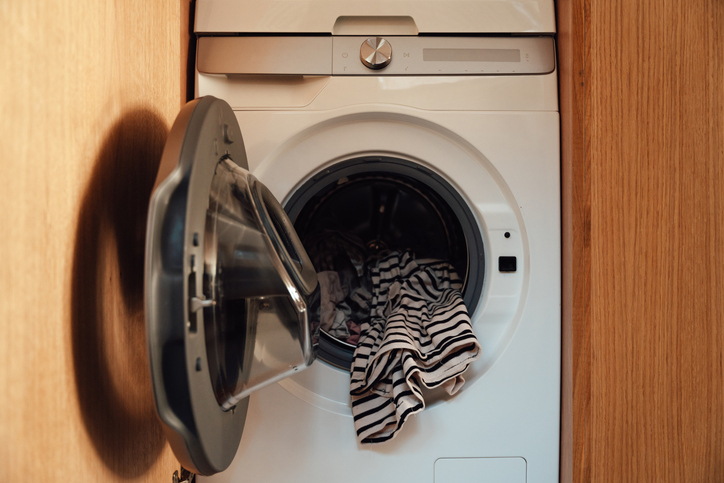
“Laundry day” used to actually mean an entire day of soaking clothes, heating water, hauling, scrubbing, rinsing, wringing, and hanging. But standing on the stage next to the most basic washing machine you can imagine, Rosling described the day his family first used one. His awed grandmother watched the tumbling drum like a movie as his mother sat down and did something unheard of on laundry day: She read a book.
That’s the point. For people of Rosling’s mother’s generation, a washing machine wasn’t just a washing machine, it was a time machine. It created time — time to learn, earn, rest, and parent. And the past century of advances in what we might call household technology have given people — and especially women — the freedom to fill their hours as they wished.
In the US, the household appliance revolution of washing machines, dishwashers, and microwaves — plus the electrification that made them run — cut the burden of housework from something like 60 hours a week at the start of the 20th century to around 28 hours by 1970 and under 20 by 2005. Food work alone went from around 65 minutes a day in 1965 to around 37 minutes a day in 2014.
Because it is women who overwhelmingly did — and still do — all those hours of housework, the appliance transformation represents a big, underappreciated improvement in women’s lives in particular. It may be difficult for us to recognize that now, after decades of growing used to these magic machines, but people at the time understood the connection. The pitch was explicit: Kitchens were being redesigned to mimic the efficiency of a factory, and advertisers marketed these appliances as engines of liberation. Some scholars argue that labor-saving appliances, plus the spread of universal plumbing and electrification, was a prerequisite to a world where women now make up nearly half the American workforce.
Though such appliances started off as the province of the rich, prices fell over time, and today, around 85 percent of American households own a washing machine. (As Vox contributing editor Kelsey Piper wrote earlier this year while reflecting on the current trade war, we shouldn’t forget the value of cheap goods.) It’s fashionable to decry America’s convenience culture, and it does come with real environmental and social costs. But if given the choice, few of us, I think, would go back to the days when hand-done laundry took an entire day.
|
|
|
The Global Laundry Divide |
|
|
Photo by Jorge Fernández/LightRocket via Getty Images |
|
|
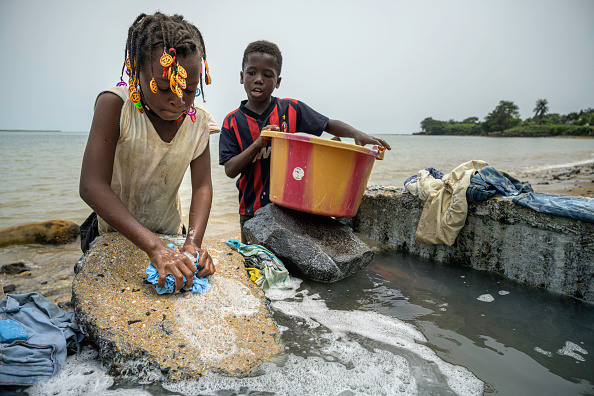
If you want a glimpse of what that would be like, just look at the lives of the roughly four billion people who still wash clothes by hand. They are overwhelmingly concentrated in low-income countries where access to electricity, piped water, and affordable machines is scarce. As a fascinating new report by the Washing Machine Project (TWMP), an NGO founded by the engineer Navjot Sawhney, found, in rich countries, only about 0.4 percent of people wash by hand; in low-income countries, it’s around 98 percent.
Hand-washing isn’t a quaint throwback; it’s a time sink, and a health risk, one overwhelmingly borne by women and girls. Time-use data gathered by TWMP in multiple countries is brutal. In Kampala, Uganda, people reported spending an average of 147 minutes per load — nearly 13 hours a week. In refugee communities in the Republic of the Congo, it was 149 minutes per load, with some women spending 20 to 24 hours each week on laundry alone. All that time displaces hours that could be spent in school, on making money, on caregiving, and even just on resting.
Hand-washers in these countries don’t just have to do the laundry — often, they need to find the water themselves. In the Ugandan capital of Kampala, hand-washing used about 14 gallons per load. In Mexico, measured use reached 16 to 53 gallons — far more water than might be used for drinking alone. Fetching that water can be dangerous. Surveys in refugee camps in Greece found 35 percent of respondents feared harassment or theft during collection, while those in the Congo named risks from robbery to gender-based violence.
Then, there’s the back-breaking nature of the work itself. In a refugee camp on the Greek island of Lesvos, 87 percent of people reported physical pain from washing clothes — hands and backs for all, legs for most — plus skin damage and injuries from rough tools. “The soap was harsh on the skin and nails,” one refugee said. It’s not just time that’s lost, but physical health. |
The magic of the modern washing machine comes not only from the appliance itself but from the clean water, plumbing, and electrification that are commonplace in rich countries. But we can make progress even in desperately low-income regions.
Sawhney’s human-powered Divya washer, which works via a hand crank, cuts laundry time and effort in low-resource settings. Field data in Uganda shows average time per wash falling from about 2.5 hours to around 29 minutes — a roughly 80 percent reduction. Over a whole month, laundry time shrank from roughly 13 hours to just over one hour.
You can see the ripple effects of that saved time. In Kenya’s Shangilia School, cutting washing time in half freed students for reading, football, chess, and study. Staff reported fewer aches and less stress about water access. In Uganda and Congo, families reported using saved hours for caregiving, and in some households, men began to share laundry duties — a small but telling shift in gender roles. There are economic gains, too. In Kampala, detergent spending dropped from around $63 to $20 per week after adopting the machine — savings that add up in households with annual incomes around $840.
It’s easy to dismiss washing machines and dishwashers as mere conveniences, even as things we should feel vaguely guilty about. Convenience, though, is too small a term for machines that have granted us the gift of time. What we do with that time is up to us, but I can think of 4 billion people who would like to have that same choice.
|
|
|
Photo by BRIAN CASSEY/AFP via Getty Images |
|
|
-
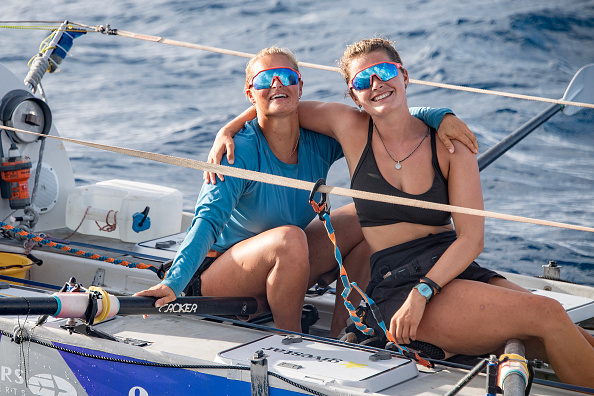
Two women, one ocean, no stops: Jess Rowe and Miriam Payne just became the first female crew to row the Pacific non-stop and unsupported — 6,907 nautical miles from Callao, Peru, to Cairns, Australia, in 165 days. Early on, a failed rudder left them stranded until a friend towed them back to restart. Later, they improvised a water-filter fix with underwear and rowed on with no nav lights or radio. Next target: the Indian Ocean.
-
Clearing the air: A State of Global Air report found a 21 percent drop in the age-standardized death rate from air pollution between 2013 and 2023, largely due to declines in household air pollution. It wasn't all good, though, especially for the elderly. Deaths linked to ambient PM2.5 and ozone rose. In 2023, nearly 5 million deaths among people 70+ were linked to air pollution.
-
A first in baby made-to-order gene edits: Doctors created a one-off gene edit for a newborn with a rare, often deadly metabolic disorder called CPS1 deficiency that affects the body's ability to process ammonia, which is a waste product from digesting protein. After two infusions of gene-editing therapy while around 7–8 months old, the infant could tolerate more protein and cut a key medication dose by about half over seven weeks. It’s early, and longer follow-up is needed, but this is a notable first sign that custom gene edits can help cure deadly disorders.
-
Don't text your therapist this story: A randomized trial of 850 adults with mild to moderate depression found that 12 weeks of text-based psychotherapy (unlimited messaging/email) produced similar symptom improvement to weekly video sessions. The study wasn’t designed to prove equivalence, and higher-risk patients weren’t included, but the results suggest a way to potentially expand the number of people who could receive therapy.
|
|
|
📲 Did I miss any good news? Share story ideas and feedback to bryan.walsh@vox.com. For additional thoughts, follow me on X and don't forget to check out the latest from Future Perfect.
|
|
|
|