|
Good News is a newsletter written by Bryan Walsh, an editorial director at Vox. He oversees the Future Perfect, tech, climate, and world teams, all of which cover stories that are both important and overlooked. |
|
|
|
|
Good News is a newsletter written by Bryan Walsh, an editorial director at Vox. He oversees the Future Perfect, tech, climate, and world teams, all of which cover stories that are both important and overlooked. |
|
|
|
Hey readers,
Some weeks, we at Vox really need to work hard to write the news. And then some weeks, it just writes itself.
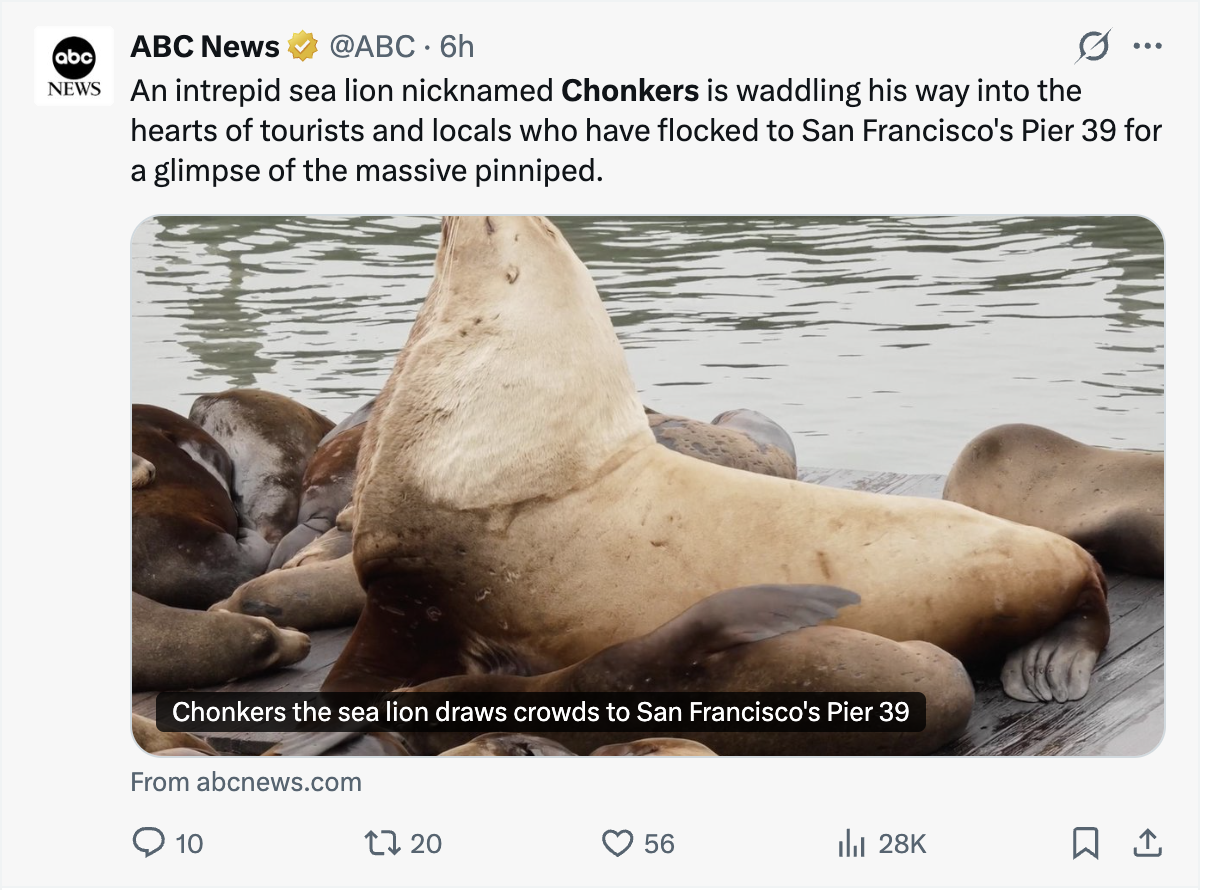
Since early March, a sea lion estimated at 2,000 pounds — a little heavier than a 1970 VW Beetle — has been hauling himself onto a deck in San Francisco, plopping down with a sound one reporter described as “an oak tree falling down,” and refusing to leave.
He is not the kind of sea lion the tourists usually come to see. The Pier 39 regulars are California sea lions, which top out around 600 to 800 pounds. This guy is a Steller, their giant cousin from up north. His name, courtesy of a San Francisco Reddit user named Des Tan, is Chonkers.
|
|
|
I have been to San Francisco's Pier 39. The sea lions are, if we are being honest, the only reason to go to Pier 39 (unless for some reason you really like to eat clam chowder out of a dissolving bread bowl). I cannot quite imagine showing up looking for the usual barking pile and finding a Steller the size of a small car staring back, possibly accompanied by a juvenile companion, as Chonkers briefly was in March.
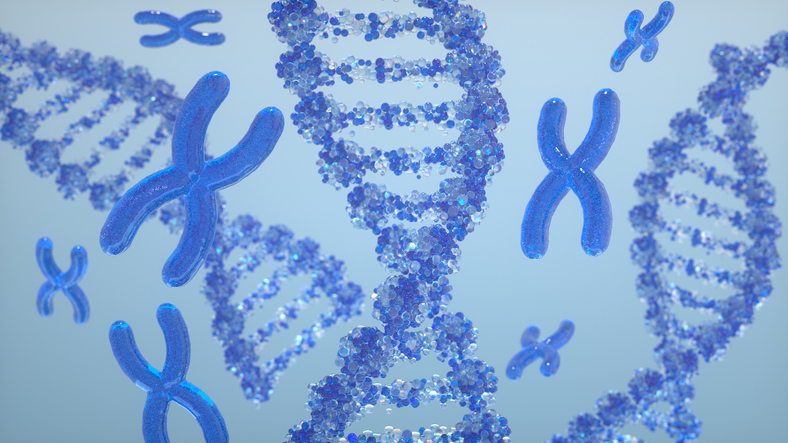
Fortunately, the harbormaster has reported that Chonkers has been a model neighbor: “He doesn’t have anything to prove, and that works in our favor.” What makes Chonkers Chonkers is, more or less, genetic. Steller sea lions evolved to handle the cold North Pacific, which means their bodies have been programmed across millions of years to lay down extraordinary amounts of blubber. The instructions live in their DNA. He was literally born to be enormous.
This week’s main piece is about us, in a way, starting to do for ourselves what nature did for Chonkers — except, instead of the slow grind of selection, we are doing it deliberately, on purpose, and in a single shot through the sometimes miraculous work of gene therapy. As always, email bryan.walsh@vox.com with questions, comments, and your personal favorite large marine mammal. Read on for: The long decline in teen births! 👶
A 21st-century TB test! 🩺 A high schooler's amazing science project! 🔬 But first... |
|
|
|
The main thing: The once and future promise of gene therapy |
|
|
In a lab room, a toddler, deaf from birth, sits while a tone plays. There’s no reaction. His face does not change.
Six weeks later, after a single injection of an experimental gene therapy, the same toddler is back in the same room. The tone plays. The toddler's head turns toward the sound. And somewhere just off screen, the child’s grandfather says his name. The boy turns and looks. He can hear.
"When the parents realized their child had a response to sound they cried," says Dr. Yilai Shu of the Eye & ENT Hospital of Fudan University, who co-led the trial, in a video that showed the results. "The whole family cried." The video cuts to another child, thirteen weeks post-treatment, dancing to music.
This is what gene therapy can do in 2026. The clip comes from the international clinical trial of an OTOF gene therapy run by Mass Eye and Ear and China’s Fudan University that provided the underlying science behind a drug the Food and Drug Administration (FDA) approved last week.
On April 23, the FDA granted accelerated approval to Otarmeni, a gene therapy from the pharma company Regeneron for severe-to-profound hearing loss caused by mutations in a gene called OTOF. In a pivotal trial, 80 percent of treated patients gained measurable hearing, and 42 percent reached the level needed to pick up whispers. Two and a half years after treatment, 90 percent of patients in the underlying multi-center trial were still hearing.
It’s a drug that certainly feels like a miracle to those in the trials, taking patients from silence to sound. But what can feel almost as miraculous is how far the broader field of gene therapies like Otarmeni — which deliver a working copy of a broken gene directly into a patient's cells — have come.
In 1999, the nascent field of gene therapy all but collapsed when a teenager named Jesse Gelsinger died four days after being injected with an experimental gene therapy at the University of Pennsylvania, the first publicly identified death in a gene therapy clinical trial. In the years that followed, funding evaporated, careers ended, and “gene therapy” became a cautionary tale.
It took years and major changes in how gene therapies are delivered for the field to recover. And now, 27 years after Gelsinger’s tragic death, we have a gene therapy that can effectively reverse some kinds of congenital hearing loss. The next decade is no longer about whether gene therapy can deliver clinical results. It's about whether it can deliver results to enough patients, at prices people can actually pay, for diseases that affect more than a few hundred kids a year.
Get those answers right, and what feels like a miracle to some in 2026 could become ordinary medicine. |
|
|
After Gelsinger died, the FDA halted gene therapy trials in the US, the National Institutes of Health tightened oversight, and the principal investigator of the Penn study — James Wilson — was barred from clinical trials for five years and stripped of his administrative titles. In the lean years that followed, two things happened.
The first was a change in delivery. Gene therapies use engineered viruses to deliver restorative genes to a patient’s cells. The therapy used on Gelsinger was carried by an adenovirus, which are highly immunogenic, meaning the human immune system recognizes them and reacts violently. It was that immune reaction that killed Gelsinger. In the aftermath, the field increasingly turned to adeno-associated viruses (AAV), which are smaller, more tolerable, and capable of slipping a payload into the right cells without setting off a five-alarm immune reaction. AAV vectors are now the workhorse of in vivo gene therapy, including in Otarmeni.
The second thing that happened was CRISPR. Adapted in 2012 by Jennifer Doudna and Emmanuelle Charpentier into a precision gene-editing tool, CRISPR could do something AAV could not: find a specific spot in the patient's own DNA and rewrite the letters there, correcting the broken gene in place. CRISPR also earned gene therapy a cultural moment it hadn't had since before Gelsinger. Money and talent flooded back into the field — including into the AAV programs that produced Otarmeni.
|
|
|
One disease after another |
|
|
|
The clearest sign something has shifted in the field is the lengthening list of therapy approvals. In December 2017, the FDA cleared Luxturna for hereditary blindness from RPE65 mutations — the first gene therapy in the US for an inherited disease. Two years later, Zolgensma was approved for spinal muscular atrophy, a wasting disease that kills children before age two in its severe form. In 2022, Hemgenix made hemophilia B the first bleeding disorder with a one-shot fix. In 2023, Casgevy and Lyfgenia did the same for sickle cell, with Casegevy becoming the first FDA-approved CRISPR therapy.
The sickle cell approvals matter most because they are the first for a patient population that is large; 100,000 Americans suffer from it — mostly Black, and historically underserved. The gene therapies are also proof of concept that the underlying CRISPR mechanism can be redirected at multiple different targets. Verve Therapeutics is using base editing to permanently disable PCSK9, a gene that controls how much LDL cholesterol stays in the bloodstream, with the promise of one-time treatment instead of daily statins for patients at high cardiovascular risk. Early trial data showed a 53 percent average drop in LDL cholesterol. Trials are open for additional hereditary-blindness genes, Pompe disease, and a long list of single-gene conditions.
|
|
|
The science is working, but paying for it is another matter.
These are the list prices for the recent approvals: Luxturna at $850,000 per patient, Zolgensma at $2.13 million, Casgevy at $2.2 million, Lyfgenia at $3.1 million, Hemgenix at $3.5 million. Two-thirds of US sickle cell patients are on Medicaid, and only 16,000 are eligible for Casgevy under the current label. Regeneron has pledged to provide Otarmeni for free in the US, but that works only because the OTOF patient pool is small — an estimated 50 babies a year. That math won’t work for more common disorders.
While cost may not be a problem for the families that could qualify for Otarmeni, it’s not the only concern. Cochlear implants, the standard treatment for OTOF patients for decades, have been contested within Deaf culture since the 1980s, with many arguing that deafness should be seen as identity rather than deficit. Gene therapy applied to infants makes that question all the more fraught, since the children treated with gene therapy cannot consent to the change. And not everyone would make that choice.
Beyond economic and cultural questions, we lack gene therapy for Alzheimer's, schizophrenia, or any of the polygenic — meaning, caused by multiple genes — conditions that cause massive amounts of suffering. The cochlear is a good gene-therapy target because it is small and accessible, and OTOF is a single-gene disorder. The brain and Alzheimer’s are neither of those things. The platform that is working in one child's inner ear in 2026 is not about to deliver universal cures by 2030, or well beyond.
What gene therapies will do, however, is keep filling in the list. The next time a parent gets a rare-disease diagnosis for their child, the question will increasingly be not whether someone is working on a gene therapy, but how soon it will be ready. |
|
|
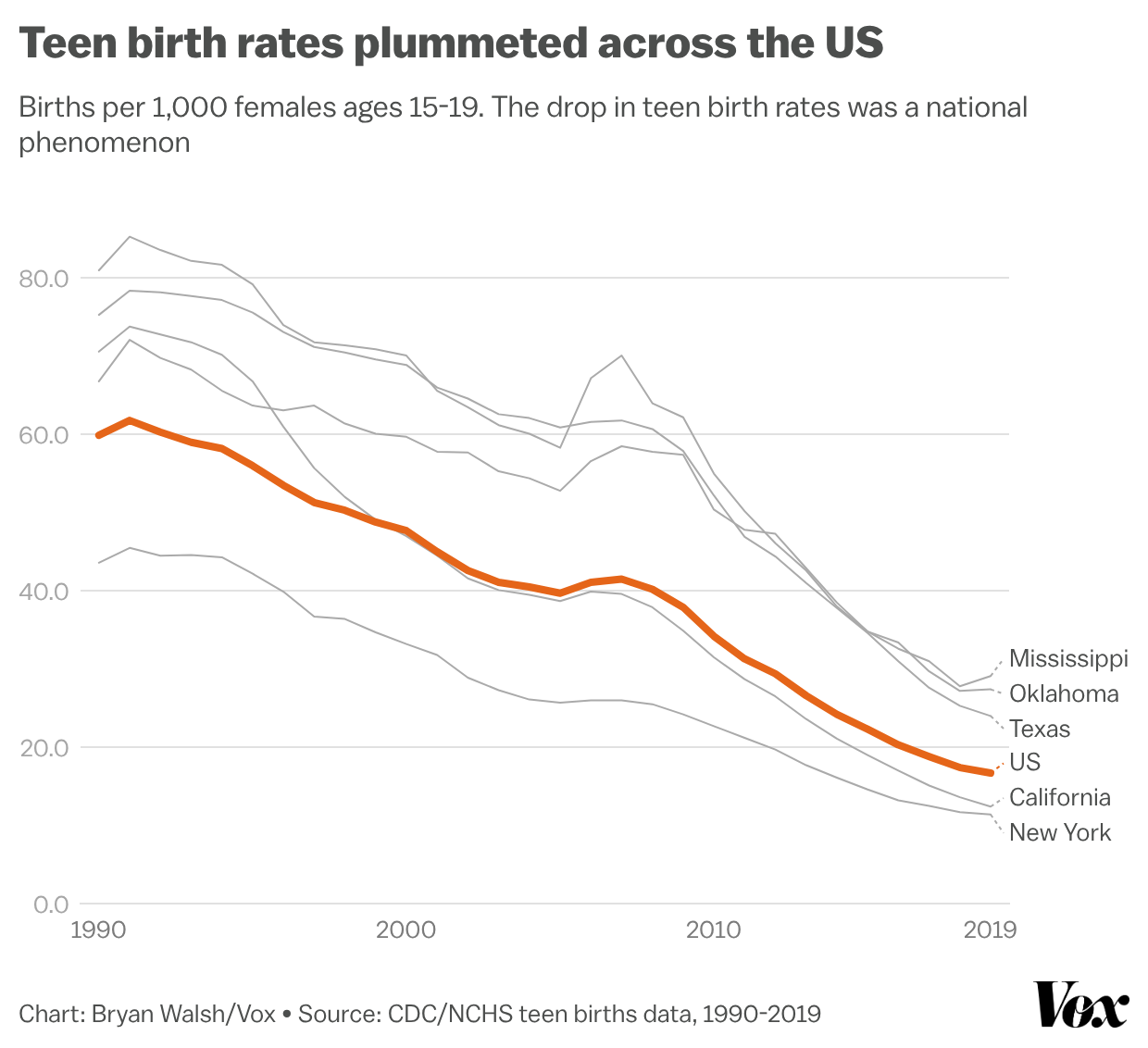
The dominant story about American teens for the last decade has been crisis: depression, social media, isolation. Here is the line on the graph people don't talk about enough.
According to CDC data released this month, the U.S. teen birth rate hit 11.7 per 1,000 in 2025, a historic low. In 1991, the comparable figure was 61.8—meaning teen births have fallen by more than 80 percent in a single generation. Among teens 15 to 17, the year-over-year drop was 11 percent.
Some of that is policy: Title X family-planning clinics helped American women avert roughly a million unintended pregnancies a year through the 2010s. Some is contraceptive technology and long-acting reversible contraception. And some is that young Americans are simply having less sex and putting off children.
Not every line on this graph is unalloyed good news — the broader US fertility rate also hit a historic low in 2025. But the part that comes from 17-year-olds avoiding pregnancies they did not want is. Quiet, durable, public-health win. |
|
|
Photo by Ebrahim Hamid / AFP via Getty Images |
|
|
|
-
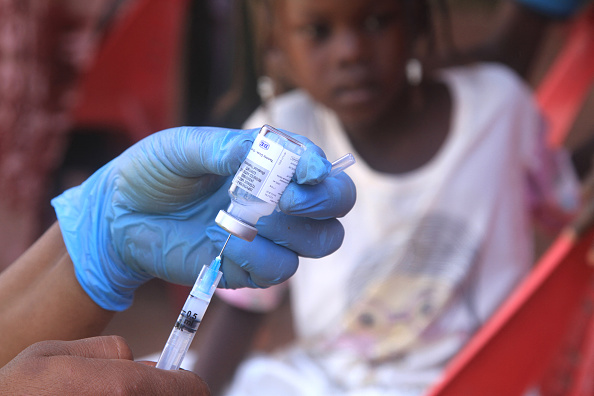
A historic catch-up on childhood shots: WHO, UNICEF, and Gavi announced this week that the Big Catch-Up — the largest childhood-immunization recovery campaign in history — wrapped in March, having reached 18.3 million children across 36 countries with more than 100 million doses. An estimated 12.3 million had never received a single vaccine before. With US foreign aid in retreat, this is the closing chapter of an era of global health that may not have a sequel anytime soon.
-
A 21st-century TB test: Tuberculosis is still the deadliest infectious disease on Earth, killing 1.23 million people in 2024 alone. One reason: The standard test, sputum smear microscopy, was developed in the 1880s and misses about half of all cases. This week, the Chinese diagnostics company Pluslife rolled out the MiniDock MTB, a portable rapid test that runs off a tongue swab, scans for TB DNA, and returns a result in minutes. Device: $300. Each test: $3.
-
Korea’s AI carers: South Korea, aging faster than any country on Earth, faces a coming “dementia tsunami” — cases are projected to double to two million by 2044. Short on doctors and caregivers, cities are now deploying two AI tools: Talking Buddy, a Naver Cloud chatbot that makes care calls to tens of thousands of isolated seniors and has flagged hundreds of emergencies, and SuperBrain, a tablet of cognitive exercises that has logged 1.5 million sessions since 2021.
-
The teenager and the teabag: Vick Tan, a high schooler at Scarsdale High School in New York, just published a peer-reviewed paper on a roughly seven-cent-per-liter fix for one of the world’s most common drinking water contaminants. He embedded commercial cellulose teabags with magnetic iron-oxide nanoparticles and pulverized eggshell. A single bag removes more than 90 percent of the arsenic in 50 milliliters of water. Tens of millions who drink arsenic-contaminated water worldwide could benefit. And what did you do your senior year?
|
|
|
📲 Did I miss any good news? Share story ideas and feedback to bryan.walsh@vox.com. For additional thoughts, follow me on X and don't forget to check out the latest from Future Perfect.
|
|
|
|
|