

Hey readers,
Like lots of people, I hoped vaccines would be our way out of living lives controlled by this pandemic. While they’ve certainly made things a lot better, humanity still has a ways to go, and we’re still not back to normal.
But there’s another new development on the horizon that, in combination with vaccines, might really be a game-changer.
In recent months, researchers have made some advances in figuring out how to treat Covid-19 once someone has contracted it. I want to focus here on treatments that seem especially effective thus far, and that come in a form with particular advantages in the fight against the virus: They are available as pills.
In the nearly two years since Covid-19 started spreading, we’ve learned a lot about how to treat it in the hospital. The one early treatment that’s formally approved and widely available in the US is monoclonal antibodies, which work quite well but have to be administered as an IV infusion or a series of four shots in a medical setting.
Uptake reportedly isn’t that high and the treatment itself is pricey — monoclonal antibodies cost about $2,000 a dose, though in the US the government covers the cost.
So as effective as monoclonal antibodies have been, there’s still a large void in our treatment arsenal. When the virus surges in an area, hospitals get overwhelmed, so people with mild to moderate cases get told to wait at home, where they have very few options.
The lack of good early treatments for Covid-19 has led to high demand for drugs that have gained adherents but probably don’t help all that much, from hydroxychloroquine to metformin to ivermectin.
But there’s finally been some real progress on identifying Covid-19 treatments that are not just highly effective, but that Covid sufferers can take at home.
Fighting Covid-19 with a pill
Fluvoxamine is a cheap, generic antidepressant that reduces hospitalizations and deaths by about 30 percent. That’s according to a big randomized controlled trial conducted by researchers, the initial findings for which I wrote up here in August. Recently, the results from the so-called TOGETHER trial that tested fluvoxamine (and some other treatments) were published in the Lancet.
Despite the encouraging trial results and the great safety profile, the NIH treatment guidelines on fluvoxamine haven’t been updated since April, and it is not widely prescribed or recommended. Now that the TOGETHER results have been published, maybe that will change.
A 30 percent reduction in hospitalizations and deaths may not strike you as that high, but the fact the drug is so cheap (it’s only $4 a dose) and the demonstrated safety track record (it’s FDA approved) make me think it should be part of the arsenal in fighting the global fight in treating Covid.
Another even more promising pill is Merck’s molnupiravir. Unlike fluvoxamine, it’s not already FDA-approved, but it’s also repurposed after a fashion: It’s an antiviral that Merck began development on to treat influenza. It’s taken as a batch of up to four pills, twice a day for five days.
In Merck’s studies, molnupravir reduced Covid-19 hospitalizations by about half. It was approved last week in the UK, and has been under review by the FDA since mid-October, which means approval in the US could be coming shortly.
The US government has made advance purchases of 1.7 million courses at a price of about $700 a course. (Merck has licensed the generic manufacture of the vaccine at a much, much cheaper price in more than 100 developing countries, and the success of that program will be key for molnupravir to make a difference worldwide.)
Finally, Pfizer’s Paxlovid is a little farther away from widespread availability, but recent research suggests it might be an even bigger deal. Paxlovid is an antiviral developed to target Covid specifically — it inhibits a specific enzyme that the virus needs.
An interim analysis of a treatment trial published by Pfizer Friday says that the company found an 89 percent reduction in risk of hospitalization in patients who take the drug, compared to a control group. That’s a huge effect size, and it’s always wise to be a little skeptical of results that good. But if they hold up (and there are more ongoing studies that could support or refute them) that could effectively mean the end of the pandemic: getting sick from Covid would be much less of a danger.
I suspect I’m not alone in being desperate for a return to normal — to concerts and indoor events, to kids’ playdates in homes, for frictionless travel — while also being conscious that more than a thousand people are still dying daily of Covid-19 in the US.
The virus might be approaching endemicity, but that death rate needn’t become a new normal. By developing better at-home therapies, we can beat the disease back both among those vaccinated people who develop an infection anyway and among those people who’ve declined to be vaccinated. There’s some really good news here, and we owe a debt to the scientists who’ve worked to develop, test, and understand these drugs.
—Kelsey Piper, @kelseytuoc
Why are rich countries still monopolizing Covid-19 vaccines? 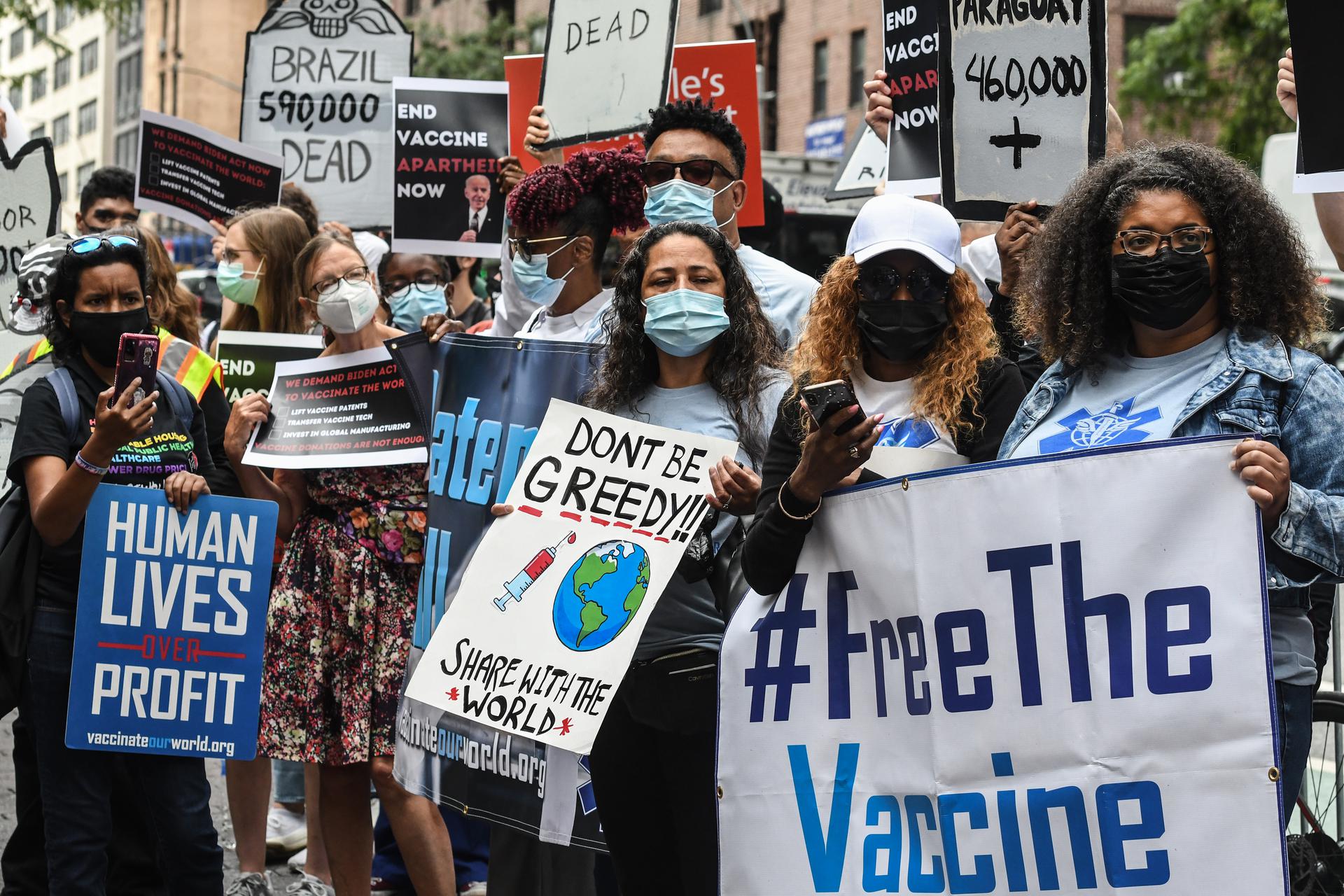
Stephanie Keith/Bloomberg via Getty Images Half the world has gotten a Covid-19 shot. Yet the vaccination rate in some countries is less than 10 percent. Read more »
One Good Thing: A documentary about Philly cops’ worst enemy becoming their DA 
Mark Makela/Getty Images What happens when your prosecutor’s goal is keeping people out of prison? Read more »

Access the web version of this newsletter here.
This email was sent to jfgo71@gmail.com. Manage your email preferences or unsubscribe. If you value Vox’s unique explanatory journalism, support our work with a one-time or recurring contribution.
View our Privacy Notice and our Terms of Service.
Vox Media, 1201 Connecticut Ave. NW, Floor 11, Washington, DC 20036. |


