We're still good at preventing plane crashes. We just have to actually do it.

Sign up | Read more Future Perfect stories | What is Future Perfect? | Submit a question to Your Mileage May Vary


Happy Friday! It’s deputy editor Izzie Ramirez here, with a quick update before Kelsey dives into the noise around air safety. Here’s what’s going on in the world of Future Perfect:


🔮 Why humans are much, much better at forecasting than AI


🐀 Is Trump doing the right thing on animal research for the wrong reasons?


👂 Did you hear that hearing aids are cool now? 

 
👀 Our senior reporter Sigal Samuel wants to know if you have a question you want her to answer in the next Your Mileage May Vary column. She recently answered a reader’s question on how to convince loved ones to donate to charity. If you do, just hit reply to this email! 


We’ll see you Sunday. Have a great weekend!

Kelsey Piper is a senior writer for Future Perfect. She writes about science, technology, and progress. You can read more of her work here and follow her on X.

Kelsey Piper is a senior writer for Future Perfect. She writes about science, technology, and progress. You can read more of her work here and follow her on X.


Hey readers,


Air travel is remarkably, astonishingly safe. 


Every year, commercial US airlines take more than 800 million domestic passengers to their destinations, and in a typical year, zero of them are killed and very few are injured. It’s a track record made possible by a fairly intense commitment to safety. 


But increasingly over the last few years, we’ve been testing these limits.


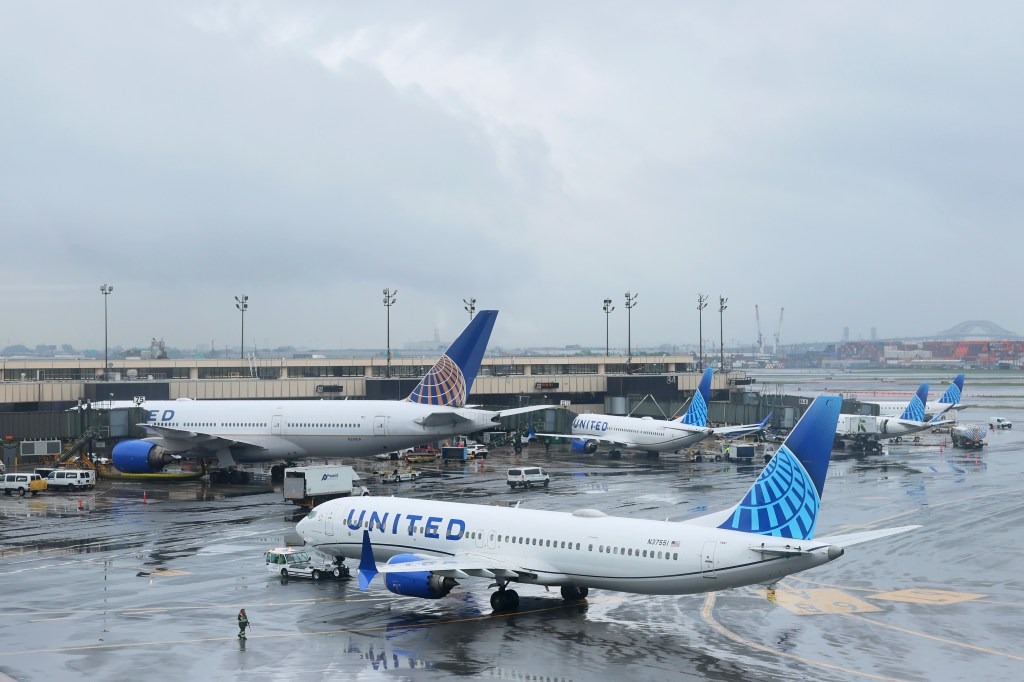
Right now the example in the headlines is Newark Liberty International Airport, which had three air traffic controllers on duty when it was supposed to have 14 and which over the last couple of weeks suffered three “communications blackouts” where air traffic controllers couldn’t communicate with approaching planes.


But it’s not just Newark. There has been an alarming rise in near-misses, communications blackouts, and other serious problems over the last few years at airports across the country, often a consequence of understaffing and high traffic. The midair collision near Reagan National Airport in Washington earlier this year that killed over 60 people was the deadliest air crash in the US since 2001.


Even with the Washington disaster, very few of these incidents, thankfully, get anyone killed. That’s because the US achieves the astonishing safety of our air travel system with defense in depth, which means a bunch of different things have to go wrong for a crash to happen.


Planes have on-board systems that should alert them if they’re too near another plane, even if air traffic control is sleeping on the job. There are backup emergency frequencies in case a communications blackout occurs. There are pre-published procedures for what to do in the event of a landing that looks unsafe, so if the pilots find themselves abruptly entirely out of contact with the ground or coming in for a landing on a runway that they realize too late isn’t clear, they have been trained on precisely how to respond.

Michael M. Santiago/Getty Images

Pushing our defenses against disaster to the limits


In the risk analysis world, this is called the “Swiss cheese” model of how to prevent a disaster. 


Every layer of a system made up of humans — with all our flaws — is going to have some gaps. Air traffic controllers will have a bad day or be tired or let something slip their mind. Technological solutions will have limitations and edge cases. Pilots will make mistakes or have a medical emergency or get confused by unusual instructions. 


So each layer of the defenses against disaster has “holes” in it. But so long as the holes don’t all line up — so long as there isn’t a gap in every single layer at the same time — the defenses hold, and the planes land safely. 


All of this means that despite the absurd strain on air traffic controllers, flying out of Newark is still almost certainly going to go fine. 


But to achieve and maintain the exceptionally low accident levels that we’ve taken pride in over the last 20 years, “almost certainly” isn’t good enough. If you want not just 99.9 percent of planes but every single plane, every single year, to land safely, you can’t afford to let one of the layers of our defenses get more and more full of holes. A “near miss” where several layers of defenses fail should be taken incredibly seriously and prompt changes, even if one other layer sufficed to save us.


Any event which would have been a mass casualty event if not for the good judgment and quick thinking of the pilots, or if not for good weather, or if not for an activation of the automatic TCAS collision avoidance system, needs to be treated as a major emergency. If we let near-misses become business as usual, then it’s inevitable that some percentage of them will convert into actual mass disasters — as happened in Washington this January, where a helicopter and plane collided in an airspace that was known to have risky amounts of helicopter traffic and a bunch of alarming near-misses.


This is, of course, important in its own right, since every single commercial plane crash is a preventable tragedy. But it’s also, I sometimes fear, a symptom of a broader cultural malaise. 


Plane crashes used to be horrifyingly common. We made them rarer through a comprehensive, aggressive program to add layers of defense against human error, revising our procedures through tragedy after tragedy. And we succeeded.

If you read the description of almost any plane crash that occurred in the 1970s, one thing stands out: It could not have happened today. Through mechanical improvements, procedural improvements, training improvements, and backup systems, we’ve built planes that are much, much harder to crash. 


But then, as frequent deadly plane crashes became a distant cultural memory, we immediately started testing how far we could underresource those systems. We ignored near-misses and staffing shortages; we failed to heed warnings that our systems are in trouble and our procedures need changes.


Boeing pushed out a dangerous new plane, hoping that other layers of our collective defenses against crashes would suffice to keep them in the air; in the US, those other layers were sufficient, but in poorer countries, they were not. 

We’ve lost our fear


The parallels to other areas of modern life stand out. It used to be that half of children were dead before age 5; vaccination changed that, but in the world made safe by vaccination, parents grew skeptical of it. Now kids are dying of measles again. 


It’s been observed that “what if we hike tariffs?” is an idea that comes around once a century or so, and goes badly enough we’re warned off it for a while. We have to touch the hot stove ourselves to learn that it burns us, it seems: The cultural memory doesn’t last for all that long.


This isn’t necessarily a bad thing, by itself. I wouldn’t want to live in a world where caution only ever ratchets up; safety is a trade-off, and it’s reasonable to relax precautions if we still get good results without those precautions. 


But in some cases — like understaffing air traffic control or not vaccinating against measles — the precaution in question passes any reasonable cost-benefit calculation. Our “lesson” is taught by the deaths of innocent people. 


And more terrifyingly, it’s not clear we’re even learning from our brush with reality. Were the deaths of children in Texas enough to turn around measles vaccination rates? Did the crash over the Potomac teach us to start paying more attention to near-misses? 


It’s too early to say, but it doesn’t look good so far — and that is what really scares me.


—Kelsey Piper, senior writer


📲 Questions? Comments? Tell us what you think! If there is a topic you want us to explain or a story you’re curious to learn more about, fill out this form or email us at futureperfect@vox.com.


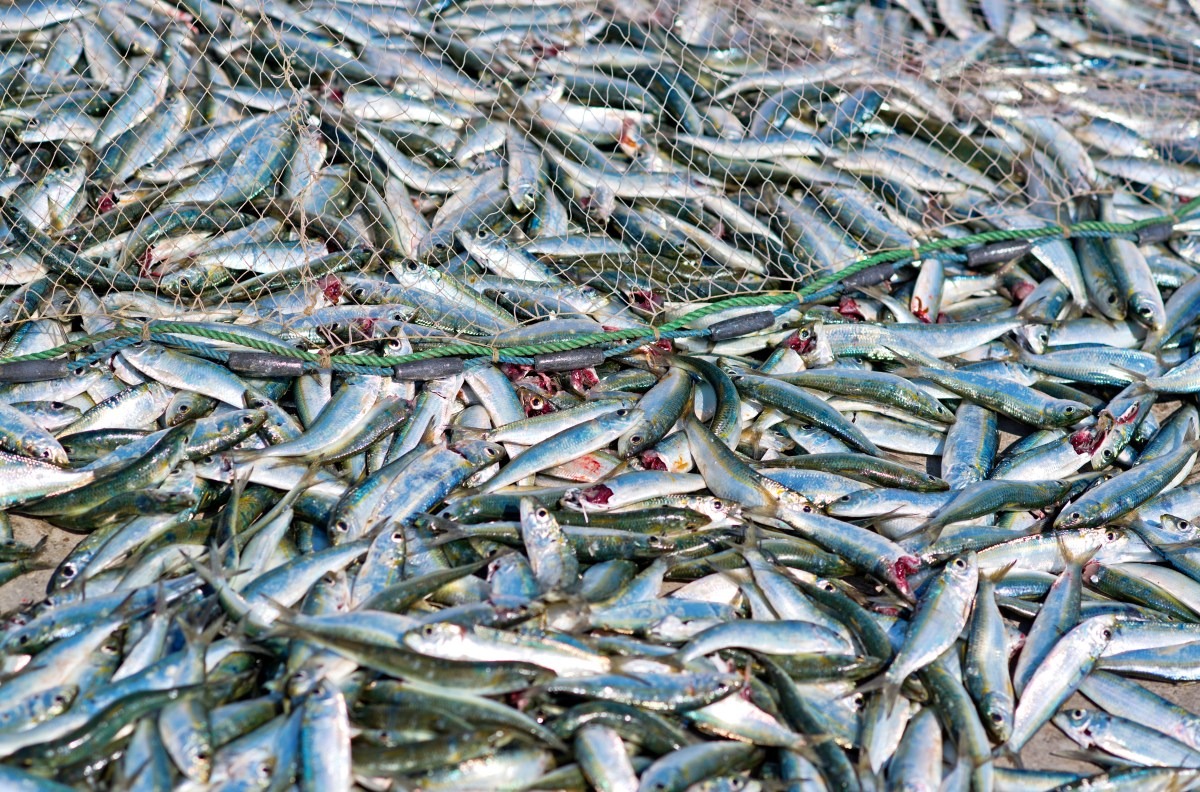
Humans are on pace to slaughter 6 trillion animals per year by 2033

Angelafoto/Getty Images

Should you care about the suffering of bugs? Concern for the welfare of insects — and even fish and shrimp — might bemuse or even offend many people. Senior reporter Kenny Torrella breaks down the intellectual journey that leads animal rights activists to take the question seriously. 


More on this topic from Vox:

    • Every president is friendly to the meat industry — but Trump is taking it to another level
    • How the most powerful environmental groups help greenwash Big Meat’s climate impact
    • Fish farming was supposed to be sustainable. But there’s a giant catch.
 

Does your job feel pointless? This might be the answer.

Screenshot/Vox

Instead of measuring our success in terms of fame or fortune, we could measure it in terms of how much good we do for others. And we could get super ambitious about using our lives to do a gargantuan amount of good. Senior reporter Sigal Samuel interviewed historian Rutger Bregman for The Gray Area about opting for moral ambition.


More on this topic from Vox:

    • You can’t optimize your way to being a good person
    • I’m doing good work in my government job. Should I quit anyway?
    • The real argument artists should be making against AI
 

📢 What ethical questions do you have? Talk to us!


Your Mileage May Vary is senior reporter Sigal Samuel’s advice column offering you a framework for thinking through your philosophical questions every other Sunday right here in your inbox.

To submit a question anonymously, click here.
 
WHAT WE’RE THINKING ABOUT

The Simpsons

Like most people, I am generally of the assumption that music, film, and culture in general reached their zenith when I was about, uh, 21. (The difference is that in the case of my generation, this is unarguably true.) So I appreciated Spencer Kornhaber’s magisterial essay in the Atlantic asking whether “this is the worst-ever era in American pop culture history.” I mean, obviously yes, right? And Kornhaber does rack up a damning list of evidence why algorithms, shortened attention spans, identity politics, and other factors are zombifying pop culture.


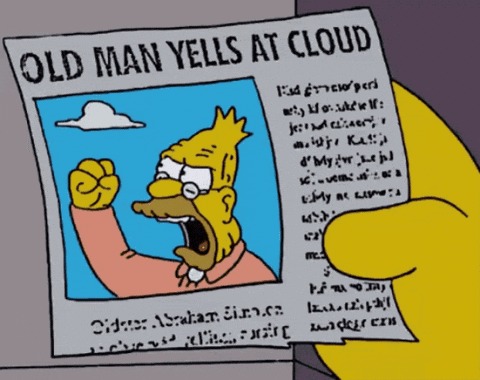
He does, in the end, offer some green shoots of hope, and there’s always a risk that essays like this are just the high-end version of old man yells at cloud. But I think Kornhaber is ultimately more convincing in his pessimistic mode. Not because the artists have actually gotten that much worse or unoriginal, but because the audience has. That’s right, it’s our fault. — Bryan Walsh, editorial director


If you read Future Perfect, you’re probably curious about the broad trajectory of the world and its economy, and the fate of globalization. If that’s you, then run, don’t walk, to read Empty Vessel by Ian Kumekawa. 


It’s a history of a single, unpowered seacraft (“the Barge”) and its journey from Sweden to Scotland to the Falklands to the East River to Nigeria, and the many, many steps along the way. Kumekawa uses this boat to weave together dozens of seemingly different stories, from the rise of Rikers Island in New York (the barge was an overflow site for prisoners) to Volkswagen’s heyday of German production to the murky and opaque dealings of the City of London. I’m extremely biased (Ian has been a close friend for decades) but I found it to be a sail well worth taking. — Dylan Matthews, senior correspondent


Speaking of the broad trajectory of the world and its economy… today I'm listening to AI researcher Daniel Kokotajlo talk to the New York Times's Ross Douthat about how AI will radically reshape the economy. Remember, Daniel, who was on our Future Perfect 50 list and in our Good Robot podcast, is the guy who blew the whistle on his former employer, OpenAI. Now, he's put out a prediction, "AI 2027," spelling out how he thinks AI will lead to human obsolescence over the next few years. You might think it's overly doom-and-gloom — personally, I think there are certain things that won't be easily automated — but his perspective is worth wrestling with. — Sigal Samuel, senior reporter


The best thing about vacation is reading all the books on your nightstand that you promise you'll read, but never actually do. So there I was, suntanning on the beach in Puerto Rico, reading C Pam Zhang's A Land of Milk and Honey. It's a dystopian story where a worldwide smog has completely destroyed all food systems — that is, except for techno-utopias in high altitude. The unnamed narrator aches for some of the pleasures we take for granted — like the zingy, peppery bitterness of arugula — so she lies on her resume to get a chef job in the titular Land of Milk and Honey. The prose, at times, can be overly decadent, but it comes in sharp contrast with her lover's well-intentioned yet out-of-touch intentions to repair the global food system.  — Izzie Ramirez, deputy editor


Become a Vox Member


Support our journalism — become a Vox Member and you’ll get exclusive access to the newsroom with members-only perks including newsletters, bonus podcasts and videos, and more.

Join our community
 

Are you enjoying the Future Perfect newsletter? Forward it to a friend; they can sign up for it right here.

Want more Future Perfect in your inbox? We also have four other free newsletters you can subscribe to:

  • Good News: a weekly newsletter from Bryan Walsh curating the everyday acts of progress that can help us feel better about the world around us.

  • Processing Meat: a biweekly newsletter from Kenny Torrella and Marina Bolotnikova analyzing how the meat and dairy industries shape health politics, culture, and the environment.

  • Meat/Less: a five-week course on how to eat less meat.

  • More to Meditation: a five-day meditation course providing helpful frameworks to dive deeper into meditation.

Today’s edition was produced by Izzie Ramirez and edited by Bryan Walsh. 

 
FacebookTwitterYouTube

Access the web version of this newsletter here.


This email was sent to aymentanaze.news@blogger.com. Manage your email preferences or unsubscribe.


View our Privacy Notice and our Terms of Service.


Vox Media, 1201 Connecticut Ave. NW, Floor 12, Washington, DC 20036.
Copyright © 2025. All rights reserved.