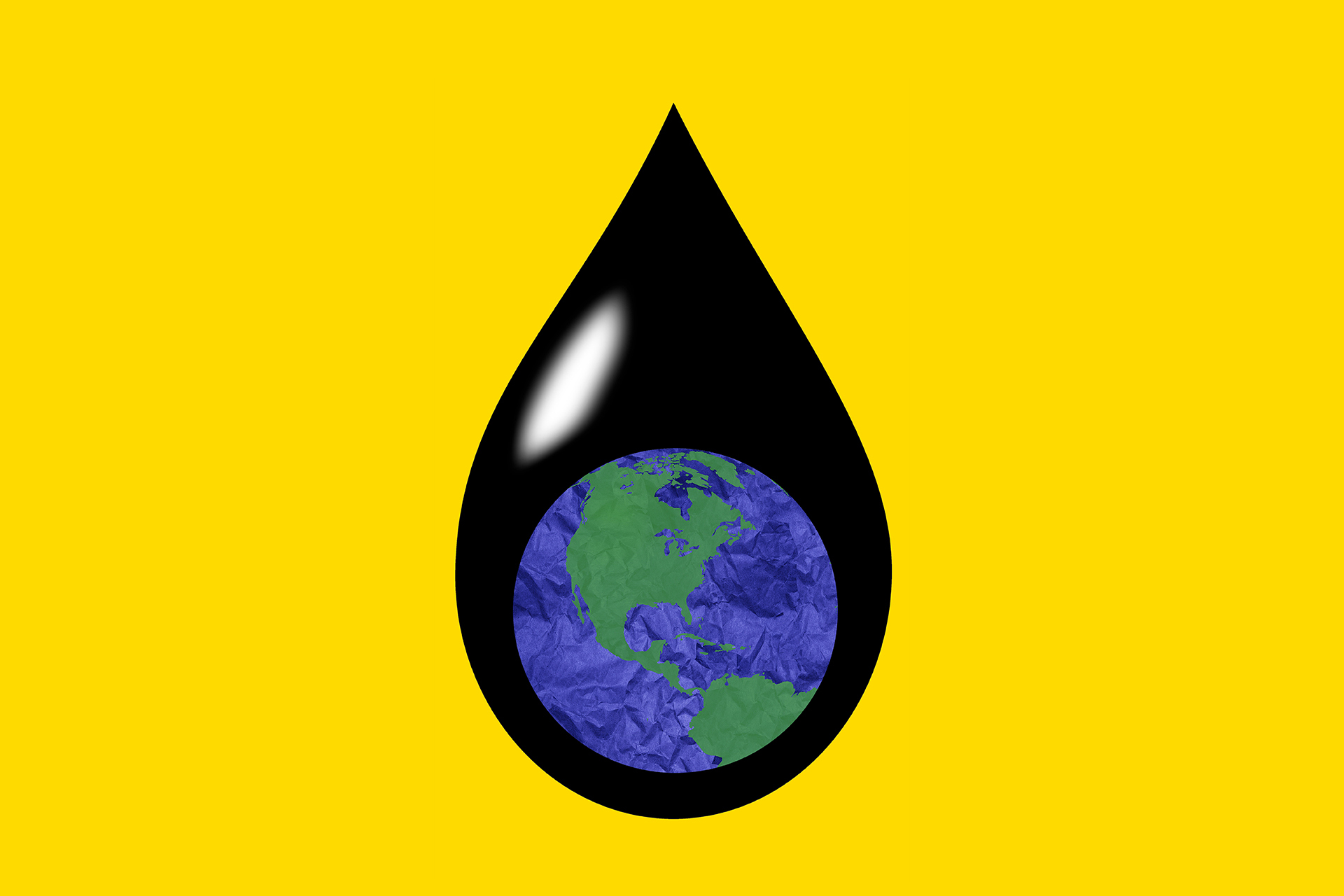
Americans are obsessed with toxins — it is a rare point of consensus in our increasingly polarized country. According to a Pew Charitable Trusts survey from earlier this year, more than 70 percent of US adults say they are worried about exposure to harmful chemicals in food and drinking water, and more than half say they have the same concerns about food packaging and kids’ products. The vast majority want the government and businesses to do something about it.
It is, in a sense, the word that animated the Make America Healthy Again movement, whose leader, Robert F. Kennedy Jr., now leads the US Health and Human Services Department. “Pesticides, food additives, pharmaceutical drugs, and toxic waste permeate every cell in our bodies. This assault on our children's cells and hormones is unrelenting. They are swimming around in a toxic soup,” he said shortly before the 2024 election. “We are mass poisoning all of our children and all of our adults."
They’re even permeating pop culture. My favorite song from Olivia Rodrigo’s new album is “The Cure,” in which she laments during the chorus: “I’ve got toxins in my bloodstream.”
I wanted to better understand why we are so fixated on this idea that the modern world is poisoning us. And so earlier this month, I spoke with four experts — two anthropologists, a biologist, and an environmental researcher — and probed what we can learn from our collective obsession with toxins.
From those conversations, a clearer picture of our toxin mania emerged: why we’re so worried, why different people have such different ideas about how to combat the threat of toxins, and why we’ll need more productive ways of thinking about our relationship to the chemicals that permeate our world. Here’s what I learned.
At the heart of our toxin obsession is widespread distrust
Let’s start here: A big part of the reason people are preoccupied with toxins is because of the strong scientific evidence that some chemicals can cause harm to human health. And there have been several high-profile tragedies that have demonstrated the stakes. Kim Fortun, an anthropologist at University of California-Irvine, started her career studying the 1984 Union Carbide India Limited pesticide plant disaster. Hundreds of thousands of people were exposed to toxic chemicals and thousands died as a result. It is one of the worst industrial disasters in history.
But it’s far from the only one. Nicholas Shapiro, an environmental researcher at UCLA, focused early in his career on the formaldehyde exposure experienced by thousands of Americans when they were put up in provisional housing following Hurricane Katrina in New Orleans. “The largest formaldehyde exposure in our species’ history” is how Shapiro described it to me. And the list goes on: the Fukushima disaster in Japan in 2011, the more recent East Palestine train derailment in Ohio in 2023, etc., etc.
But at the same time, those one-off disasters have become mercifully more rare. As a result, our focus has shifted from acute emergencies to the effects of long-term but low-grade exposures. And the evidence is becoming clearer that these everyday substances can and do harm us. “The science is in,” Fortun said. Shapiro said his own research evolved from the acute formaldehyde exposures after Hurricane Katrina to the more mundane exposure that many people who live in housing built with formaldehyde-laden materials experience.
Taken together, the combination of high-profile disasters and mounting research around everyday exposures has seared into the minds of most Americans the idea that the world in which we live has some inherent toxicity, as evidenced by the Pew survey. And that belief has been buttressed by social and political trends.
We are also living through an anti-institution backlash — and a fear of toxins fits neatly into that worldview. These corporations are poisoning us and the government has been inept in doing something about it. The reality may be more nuanced, but that narrative is powerful.
“No one was minding the store when they're chemically exposing us,” Fortun said. “I don't think distrust of institutions is at all a natural phenomena. It's historically produced.”
And it can even cross the political divide: One of the most striking features of the MAHA movement has been its ability to attract people from both the right and the left.
“One of the things that they have in common is a…suspicion of corporate power that, I think, is actually real, even on the right,” said Alex Nading, a medical and environmental anthropologist at Cornell University. “There is a nostalgia or at least a veneration of a pure environment that doesn't really have, necessarily, always a party attached.”
There is an ideological divide in how people think about toxins
But Americans’ responses to our toxic world are not nearly so unified. Some people focus on the structural issues and underlying biases that lead to, for example, pollution to be concentrated in low-income neighborhoods.
As Nading explained it to me, the environmental movement has long viewed pollution as a racial and social justice issue. “The choice to pollute and where you pollute is really saying something about race relations,” he said. Yes, environmentalists care about the effects on the natural world — but they are primarily concerned with how pollution affects humans, and which humans it affects specifically. They see it as a systemic and societal problem to be solved.
But other people learn that, say, Monsanto used a banned pesticide and turn inward, to the individual. “I think one really important difference between the left and the right is that the right is really driven by a desire for purity, the integrity of the body, etc.,” Fortun said.
Or, as Nading put it, “There's that ‘regulate’ impulse. And then the other side of it is: Gain control. Assert sovereignty.”
In our current MAHA moment, the latter outlook seems to be dominant. Remember, in the quote at the top of this story, Kennedy describes toxins “permeat[ing] every cell of our bodies.”
And that mindset can lead us to approach toxins as individual consumers first and foremost, rather than advocating for systemic policy solutions. That is in part because government regulations have evolved to focus more on consumer products than the built environments in which we live, Shapiro said. We fret over sunscreen and the foods we eat and microplastics in our kids’ toys and diapers.
At the same time, some of the foundational environmental laws that were supposed to clean up our air and our water have been undermined in recent years, without the same collective fixation or uproar.
“Air is the primary source of exchange between our bodies and the environment. We inhale much more by weight…than we do food or water,” Shapiro said. “So it's interesting that we really understand our exposure through commodities as opposed to the substance of life, which is air.”
Americans need to find a more productive way to think about toxins
It’s easy to look at the ingredients on your shampoo or your groceries, see that long list of scientific-sounding names, and feel hopeless. I think part of the reason we keep talking about toxins is because it seems like they are truly everywhere; reading about the ubiquity of microplastics and nanoplastics and their uncertain health impacts can be overwhelming.
The reality, based on my conversations, is that our approach to toxins can’t be either individual vigilance or policy reform. We will need both. In the shorter term, we are all unavoidably consumers navigating a marketplace with a lot of products made with potentially harmful substances. We have to be able to make rational decisions about how to protect our health. But in the longer term, structural change will be necessary to mitigate our exposures to toxins and hopefully improve health for the entire population.
For each of us as individuals, Gerald LeBlanc, a biologist at North Carolina State University and author of Everyday Chemicals: Understanding the Risks, emphasized that there is a difference between a substance being hazardous (meaning it could potentially cause harmful health effects) and it actually doing harm. The distinction is in how much of said substance you’re actually exposed to.
As both he and Nading put it to me: “The dose makes the poison.”
“People are prone to think only about hazard. What can this chemical do to me with no consideration of exposure?” LeBlanc said. “People think about the mere presence of a chemical as being problematic. You really need to think about the dose that an individual is receiving along with the hazard or the toxicity of that material.”
Still, this approach places a lot of the responsibility on the individual: You have to research not only what chemicals are potentially harmful, but also figure out how much you are being exposed to. And it can easily go awry. Take MAHA and RFK, Jr.’s obsession with aluminum in vaccines, for example. It sounds intuitively like metals in a vaccine must be bad; it’s only once you delve into the safety data that you can learn it’s been proven to be safe.
We live in a DIY era of medicine — and that requires being a discerning consumer of medical data and research. If you really want to be your own advocate, don’t just trust what some content creator confidently tells you in a TikTok reel. Educate yourself on the differences between peer-reviewed research and preprints, for example, or the important gaps between animal-based research (which influencers with something to sell love to cite) and human studies. If you are wary of trusting the CDC or FDA, check out what your local or state health department says on a particular issue; in the post-pandemic era, more people say they trust the sources that are closer to home than the federal agencies.
Because in the absence of a muscular governmental approach to toxic chemicals, being smarter consumers is going to be important in the short term.
That’s a framework for individuals living in a world that feels replete with toxins. But we do also need a theory of change about how to address it on a larger scale. It may not pay off for a long time, but we can start to lay the groundwork now through old-fashioned community organizing that turns fear of harmful chemicals into fuel for change.
Because someday, the opportunity for meaningful reform will come. Shapiro told me he believes the nostalgia for some idealized past free from chemicals that runs through many people’s feelings about the modern world “is going to run out of gas.” We are not going to roll back the Industrial Revolution.
So what does that organizing look like? It starts with building relationships with the other people in your community who have the same concerns. Learn about what’s happening in your city or your state on these issues: States have their own rules around pesticides and clean air. Get up to speed on the laws and policy changes that are working their way through your local government, and figure out which organizations and advocacy groups are working toward policy changes that align with your own goals. In short: Get involved.
Shapiro specifically urged concerned public health workers to try to start connecting now with the MAHA-curious people in their life and in their community. He pointed to a Bible study model, where small groups of people get together and talk about the issues, go over the evidence, and brainstorm ideas that could address the structural sources of toxins — not only in consumer products, but in the air we breathe and the water we drink and the food we eat.
Because these concerns about toxic substances are something we share with many of our neighbors, they can be an opportunity to make connections — and to organize for policy reforms together. And from there, maybe some day in the not-too-distant future, real change could be possible.