Hey readers,
It's Sara here. Every great new discovery has to start somewhere.
Penicillin was born out of moldy petri dishes followed by years of experimental testing. The Spice Girls started with an open audition, months of rehearsals in a shared house, and demo tapes stolen in the name of girl power. When it comes to US foreign aid, the engine behind new discoveries tackling enormous global challenges was a tiny program called Development Innovation Ventures, or DIV.
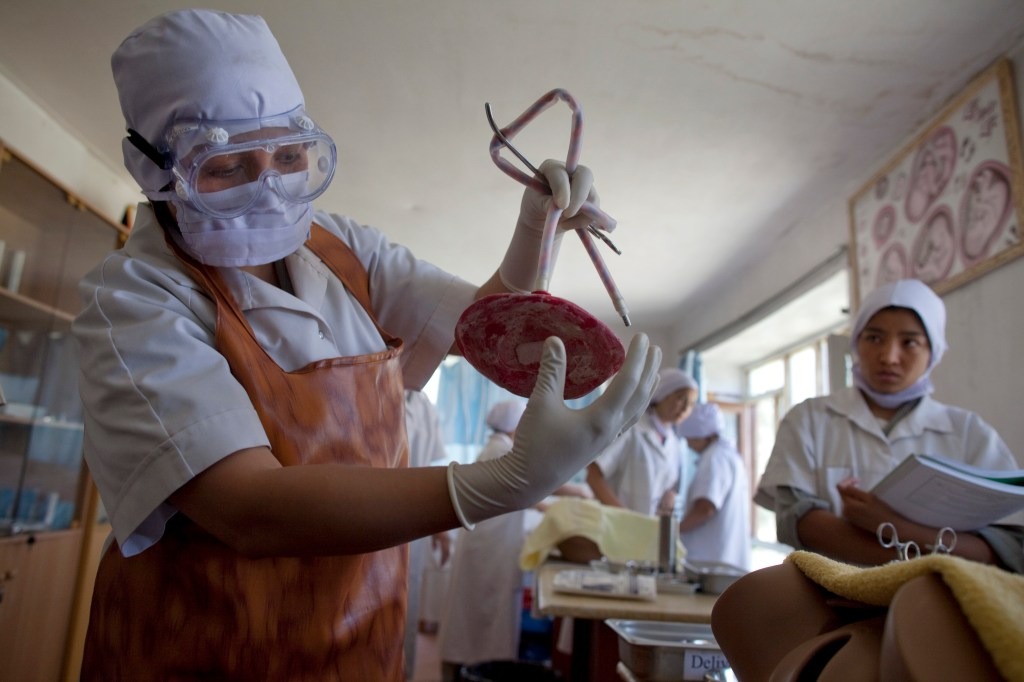
Like the rest of the US Agency for International Development, DIV — which cost less than 12 cents per American per year to run — was dismantled within the first few months of the second Trump administration. Many vital projects, like a new low-cost, electricity-free respiratory kit for helping babies breathe, were cut off from support even as they “were moments away from the finish line,” said Sasha Gallant, who led DIV under USAID.
|
Paula Bronstein/Getty Images |
As broad swaths of global health architecture plunged into survival mode, the world also lost a cutting-edge clearinghouse for finding out what works and what doesn’t work in foreign aid. It was one of the only programs in the world laser-focused not only on saving people’s lives now, but also on learning how to save many more lives in the future.
But now, one year later, DIV is back — and under new management. Instead of being an entity under USAID, former leaders have spun the program into a newly-formed independent nonprofit called the DIV Fund. Backed by private philanthropy, including a $45 million grant from Coefficient Giving, the slow and steady work of building a brighter future can continue.
"It was hard to even think about innovation early in the year. It was like the house was on fire, and we’ve just got to get the kids out of the house,” said Gallant, who co-founded the new fund. But ultimately, “you also have to have better houses. We have to have better tools to extinguish the fires.”
For one possibility, look to Guatemala, where corn figures into almost every meal. DIV-backed program Semilla Nueva is literally seeding a new treatment for malnutrition by connecting local farmers with maize bred to contain higher levels of zinc, iron, and protein. There’s also Uganda — where Health Access Connect is building a fleet of motorcycle taxis to bring health professionals to remote villages — and Bangladesh, where the ARCED Foundation is fighting air pollution using data and satellite imagery.
DIV’s work differs from other NGOs that tend to fund solutions that are already standard practice, and only rarely invest in incubating and testing out brand new approaches. DIV supports organizations as they pilot and pressure test those projects to see if they really work in practice. If the evidence says they do, then — and only then — will DIV then help those organizations scale up.
This model served DIV — and by extension, the world — very well during its 15-year stint at USAID. In 2021, a group of economists including Gallant and Nobel-winning cofounder Michael Kremer estimated that the $19.2 million DIV spent in its first three years generated $281 million in social benefits, which is a drab way of saying that DIV helped an extraordinary number of people live longer, healthier, more prosperous lives. That wouldn’t have been possible without careful investments in research and development.
“People come to know the programs that are tremendously effective,” like investing in teachers, handing out malaria nets, or getting kids vaccinated, said Gallant. “But somebody had to figure out that those worked.”
As an independent nonprofit, the DIV Fund won’t have nearly as much money or resources as it did at USAID. This year, the fund will grant out about $25 million per year, just under half of what it could give before. You can help them overcome that gap by donating to their work here.
But even so, DIV’s real potential has always come from punching above its weight, especially in moments when the good ideas it finds eventually catapult into the mainstream. Gallant said the fund’s ultimate goal is to continue connecting with partners — including philanthropists, national governments, and multilateral organizations — to ensure that innovation is “not just happening in an R&D shop” but rather “meaningfully influencing” decisions about where to steer funds in the real world.
And if the US government ever comes knocking again, she says they’ll welcome it with open arms. The doors are “entirely open,” said Gallant, and “will remain open to any partner trying to think about how to integrate evidence-driven innovation into large-scale programming." |
|
|
|
Sara Herschander
Future Perfect fellow |
|
|
| Sara Herschander
Future Perfect fellow |
|
|
We have a miraculous anti-aging vaccine. Why aren’t more people getting it? |
Research has found that a routine vaccine slows aging and cuts dementia risk. |
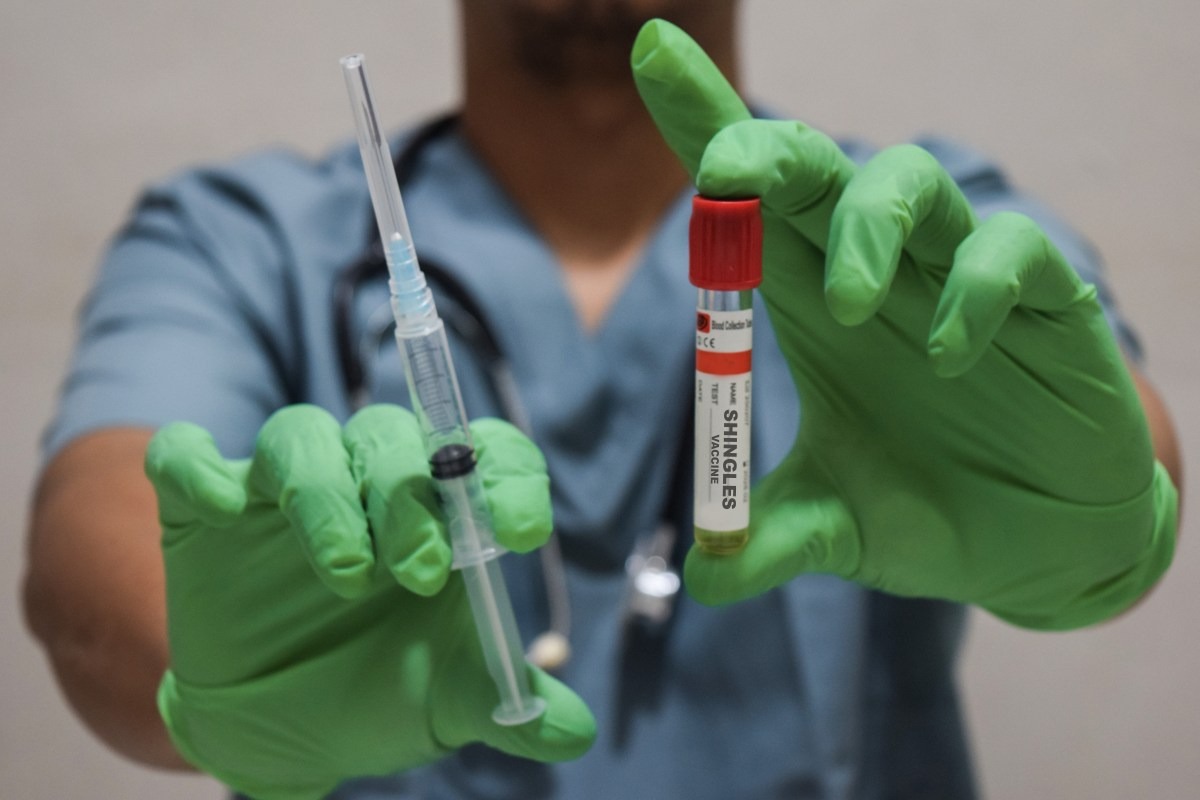
If someone told you there was an off-the-shelf intervention that slows aspects of biological aging — without requiring some moonshot breakthrough — you’d be right to be skeptical. But this isn’t a wellness grift or some Instagram longevity hack. It’s the shingles vaccine.
In his latest piece, Vox health correspondent Dylan Scott digs into an astonishing body of research that shows that the shingles shot delivers benefits far beyond preventing a painful viral infection. Multiple studies have found associations with lower rates of dementia, signs of slower aging, and reduced inflammation — the kind of underlying damage that drives many of the world’s most expensive, devastating diseases. These benefits point to something rare in global health: a relatively cheap, already available tool with the potential to improve millions of lives.
The frustrating part is how fragile this progress is. The newer, more effective version of the shingles vaccine hasn’t yet been rigorously tested for these broader benefits, and researchers are struggling to secure funding for the trials that could tell us whether this is real — and how big it could be.
At the same time, fewer than one in three eligible Americans (!!!) get the shot at all, thanks to access barriers and deepening vaccine skepticism.
Addressing problems like aging-related disease that impact so many people hinges less on discovering new science than on convincing people to trust and use the science we already have. —Paige Vega, senior editor, climate and Future Perfect |
|
|
The Vox Membership program is getting even better with access to Vox’s Patreon, where members can unlock exclusive videos, livestreams, and chats with our newsroom.
Become a Vox Member to get access to it all. |
|
|
CAN'T STOP THINKING ABOUT... |
|
|
|
Name: Shayna Korol
Title: Future Perfect fellow
What I cover: Emerging science and tech, societal risks, space, diseases and how we treat them
What I’m binge-watching: The Apothecary Diaries, an anime that asks “what if House MD was set in a fantasy version of Imperial China?” |
|
|
Everyone’s obsessed with the moon. SpaceX, which Elon Musk founded with the express intent of colonizing Mars, is now pivoting to create a self-growing lunar city. Jeff Bezos’s rocket company Blue Origin is hitting the snooze button on its space tourism offerings to focus instead on NASA missions to the moon.
The moon is objectively easier to get to than Mars, and substantially easier to settle. But that’s not the real reason for the lunar pivot, of course.
NASA is going all-in on the moon with the Artemis missions. The astronauts on the upcoming Artemis II mission will be the first to circle the moon in more than half a century. Lunar dominance is at the heart of the second space race between the US and China, and both countries are vying to beat the other back to the surface of the moon.
Lucrative NASA contracts are shifting space companies’ attention. It’s a more sustainable business model than joyrides to the edge of space — Blue Origin’s New Shepard rocket has only carried 92 individuals, including William Shatner and Katy Perry. But fear not: According to Musk, “SpaceX will also strive to build a Mars city and begin doing so in about 5 to 7 years, but the overriding priority is securing the future of civilization and the Moon is faster.”
Speed shouldn’t be the overriding principle, though. We’ve been to the moon before — it’s not humanity’s first rodeo, but we still can’t take shortcuts. No human being has ever set foot on the Red Planet, and as I reported last year, there are a lot of logistical hurdles we need to clear before calling it home. |
|
|
⭐ ONE WAY TO DO GOOD THIS WEEK |
Last Wednesday, the Washington Post laid off nearly half of its entire workforce at the direction of Jeff Bezos, the founder of Amazon and owner of the paper since 2013. Initial reports indicated that around 300 union workers got the axe, but that didn’t account for dozens more journalists who aren’t covered by the Washington Post Guild ,such as staffers in foreign bureaus. More than 80 percent of the Post’s international desk is gone.
The laid-off international staff are in a particular bind without guild protection. And not everyone has an easy way to get home safely: Lizzie Johnson, a correspondent who uprooted her life in the US to cover Ukraine and frequently worked without electricity, was laid off in the middle of a war zone.
Michelle Ye Hee Lee, the Tokyo/Seoul bureau chief, launched a crowdfunding campaign to support these international employees not covered by the guild. All donations to the GoFundMe will “help cover rent, legal guidance, relocation to a new or safer country, storage for belongings left behind, and other urgent transition needs.”
You can donate here to support people facing the loss of benefits, visa, and housing after the gutting of their paper. — Shayna Korol, Future Perfect fellow |
|
|
Want more Future Perfect in your inbox? Sign up for more newsletters here. Need advice? Submit a question to Sigal Samuel's advice column Your Mileage May Vary.
|
|
|
Today’s edition was edited and produced by Izzie Ramirez. We’ll see you Friday! |
|
|
|