Hey readers,
Demography, I’m told, involves a lot of complicated math (just ask the pointy-headed grad students at Princeton’s Office of Population Research). But when it comes to understanding a nation’s population changes on a year by year basis, it’s pretty simple.
Population growth (or decline) is just births minus deaths plus net migration, or the sum of immigrants minus emigrants. The latter part tends to get overlooked in the debate over population, which tends to focus mostly on falling fertility rates, but it’s just as important.
If you do that math for the US in 2024, you get an increase of 3.3 million people. That was the biggest annual population growth the country had experienced in two decades, but it was almost entirely due to a massive increase in net migration, which added around 2.8 million people to the US, compared to just over 500,000 from births over deaths. Wave a magic wand and eliminate all the immigration experienced in 2024, and the US population would have barely budged.
As it turns out, though, a majority of Americans ended up voting last November for the candidate who loudly promised to wave exactly that wand. Thanks in no small part to President Donald Trump’s intense anti-immigration and deportation policies, for the first time in decades, more immigrants are leaving the US than arriving, at least according to one recent analysis from the Pew Research Center.
Another analysis from the American Enterprise Institute estimates that net migration to the US in 2025 could be negative 525,000 people. Assuming we don’t see a major change from last year in births over deaths, it’s possible that, as the Substacker Derek Thompson wrote earlier this week, “2025 could be the first year on record in which the US population actually shrinks.”
That would represent a catastrophic own goal. The decline in fertility is a global phenomenon, one that includes the US, that hasn’t recorded replacement level fertility — meaning 2.1 or more children per woman — since 2007. But the US has been able to partially compensate for that fall in fertility by remaining a major magnet for immigration. That’s not an option available to rivals like China and Russia, both of which have already begun experiencing population decline. Under Trump, though, the US is throwing that advantage away.
You will not enjoy the consequences. Cutting off immigration will lead to declining population, whether this year or in the near future, and that will mean fewer workers, especially in immigrant-heavy industries like farming, construction, and caretaking, which in turn is likely to mean higher prices for the kinds of goods and services no one can go without. A shrinking population will mean a shrinking future.
|
|
|
|
Bryan Walsh Senior editorial director |
|
|
|
Bryan Walsh Senior editorial director |
|
|
📲 Send us your questions! If there is a topic you want explained or a question you want us to answer, fill out this form or email us at futureperfect@vox.com. You can also just hit reply to this email.
|
|
|
The search for Earth’s most mysterious creatures is turning up extraordinary results |
Scientists are looking for the “dark matter” of the animal kingdom — and it’s revealing how little we know about life on our planet. |
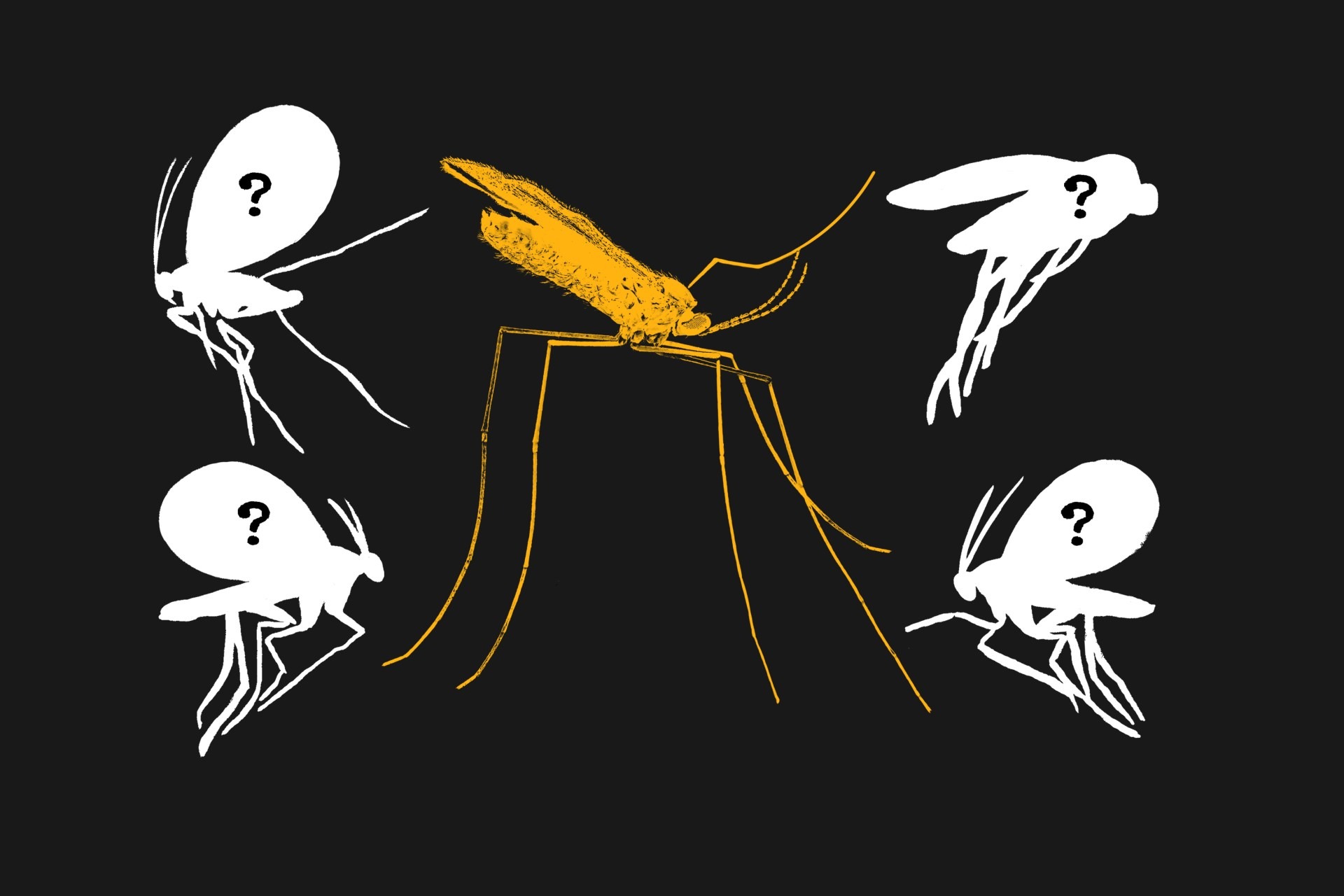
We like to think of Earth as fully mapped and understood. We’ve summited the mountains, trawled the oceans, given oodles of scientific names to every type of bird, and bear, and butterfly. But here’s the twist: Most of life on this planet actually remains invisible to us. Scientists estimate that for every known species, nine more are waiting in the shadows, nameless and unknown. That means 90 percent of Earth's biodiversity remains undiscovered. They call these organisms “dark taxa” — biology’s version of dark matter.
These aren’t charismatic megafauna. They’re the tiny, strange overlooked players — flies, mites, fungi — that pollinate our food, enrich our soils, and keep ecosystems humming. And until recently, they seemed nearly impossible to identify. What’s changing the game is DNA sequencing, a tool that lets researchers scan thousands of specimens at once, revealing just how much life we’ve missed.
Why does it matter? Because if we don’t know what makes ecosystems work, we risk losing those pieces without even realizing it — or overlooking the next global threat. This feature by Benji Jones, Vox's in-house biodiversity expert, reveals the astonishing discoveries underway and the very human stakes in finally knowing who, exactly, we share the planet with. — Paige Vega, climate editor
| |
|
CAN'T STOP THINKING ABOUT... |
|
|
| Title: Future Perfect fellow
What I cover: Biosecurity, space, science policy, and emerging technology — not necessarily in that order.
This weekend, I... recovered from jet lag after a week in the UK. |
|
|
Last month, a Danish zoo made international headlines after it entreated pet owners on Facebook to donate their dying companion animals to be fed to the zoo’s predators. “Predators need whole prey - including fur, bones and organs - as it contributes to enrichment, nutrition and well-being,” the Aalborg Zoo’s website explains. “By allowing necessary kills to become part of the food chain, we avoid waste and instead create a meaningful farewell where the animal can benefit both garden predators and nature.” The zoo accepts live horses and small prey animals like chickens, rabbits, and guinea pigs, promising “fast euthanization by trained staff” and tax deductions per donated pet.
This seems pretty grim, but Danish pet owners have responded to the call. So far this year, the Aalborg Zoo has turned 230 donated pets into meals for their carnivores. The zoo has received these pet donations since its founding in 1935. Danish zoos’ relatively cavalier attitude towards animal death and appeals to animal welfare are not without controversy, though. The Copenhagen Zoo came under fire in 2014 when it euthanized a healthy 2-year-old giraffe called Marius to prevent inbreeding. It invited visitors — including children — to watch the skinning of his remains before he was fed to lions, calling it an educational opportunity to learn about anatomy. Then it killed four of those lions, also to prevent inbreeding.
Zoos are essentially simulations of the natural world for human edification. From an animal welfare perspective, zoos are bizarre to begin with — keeping wild animals in captivity with no plans to reintroduce them to their natural habitats is inherently fraught. While I don’t think I could ever bring myself to do it, donating companion animals who would have been put down regardless to be fed to predators, then, isn’t really a step too far. — Shayna Korol, Future Perfect Fellow
|
|
|
⭐ ONE WAY TO GOOD THIS WEEK |
In Afghanistan, a devastating magnitude 6 earthquake killed over 1,400 people on Sunday night, leading the ruling Taliban to plead for help in the wake of global aid cuts. That same day, up to 1,000 people lost their lives — an entire village, decimated — in a catastrophic landslide in Sudan, where a brutal civil war has left millions displaced, starving, and virtually unreachable for the humanitarian organizations most equipped to respond.
Helping people after a natural disaster can be deceptively complicated — particularly in places already embroiled in crisis. Even when the money’s there, the people who need the most help are often hardest to reach. But that doesn’t mean we shouldn’t try.
The Sudanese Red Crescent Society, supported by the International Committee of the Red Cross, is still working around the clock in Sudan. So are the country’s dozens of local mutual aid networks still fighting to keep their neighbors safe and fed. In Afghanistan, World Central Kitchen has already set up a soup kitchen near the quake’s epicenter, and GlobalGiving is crowdfunding to support vetted response and recovery programs on the ground. Donating today can help fuel the long road to recovery — and, hopefully, make tomorrow’s disasters less deadly. — Sara Herschander, Future Perfect fellow
|
|
|
Want more Future Perfect in your inbox? Sign up for more newsletters here. Need advice? Submit a question to Sigal Samuels's advice column Your Mileage May Vary.
|
|
|
Today’s edition was edited and produced by Izzie Ramirez. We’ll see you Friday! |
|
|
|